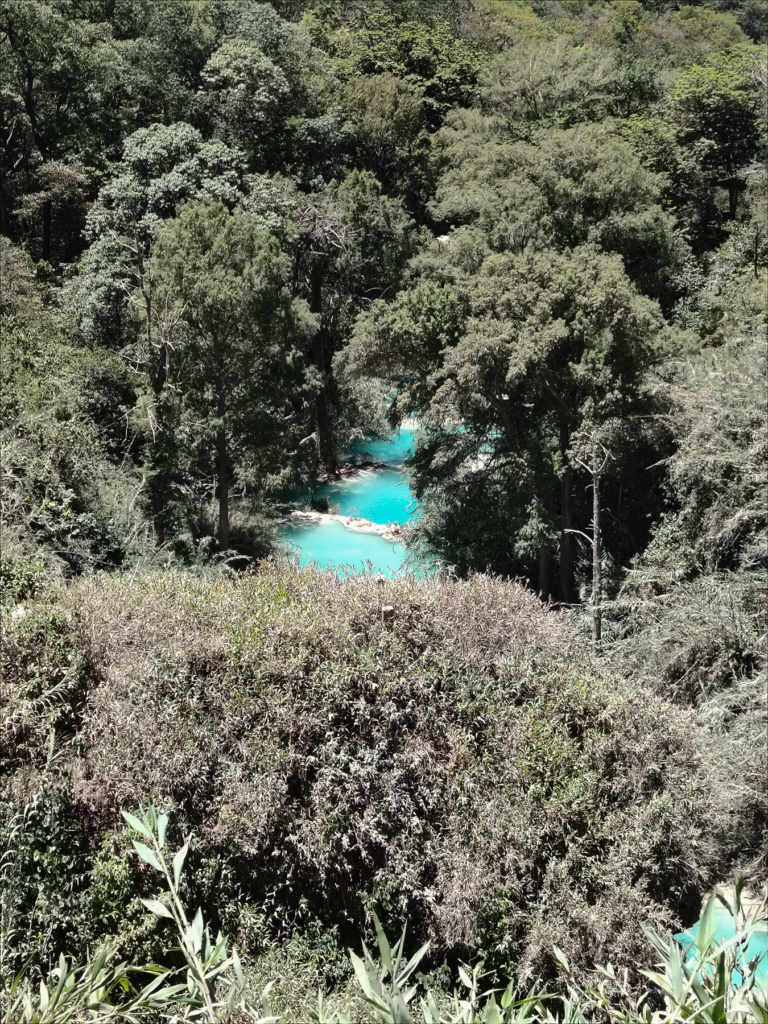
Waterfalls & River Adventures in Chiapas
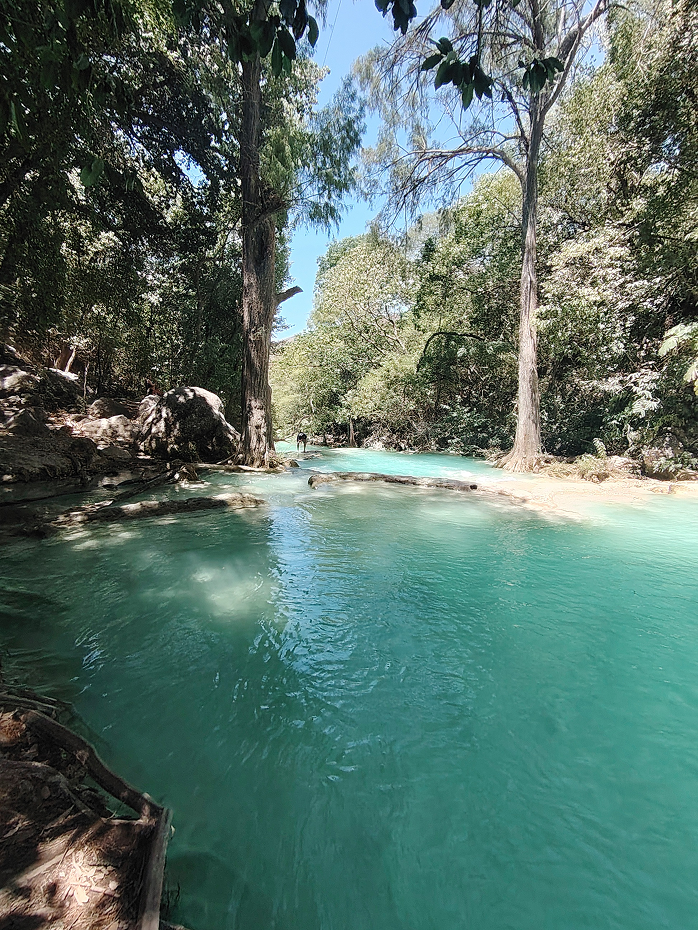
6 Best Places to Visit in Chiapas
Chiapas has far more to offer than one famous turquoise waterfall. Across the state, rivers cut through limestone formations, jungle-covered hills and deep canyons, creating very different places to swim, hike, explore or simply take in the scenery. The six waterfall destinations covered in our regional guides are spread across two main areas: the Palenque region in the north and southern Chiapas around Comitán.
They aren't all easy day trips from the same base, and each offers a different kind of experience. Here's how they compare, where they fit into your route and what to expect when you get there.
Chiapas Waterfalls at a Glance
Journey times are approximate, by road and without extended stops. Las 3 Tzimoleras requires a pre-arranged 4x4 transfer from Tzimol. Prices and opening hours at community-run ecotourism sites can change, and some destinations have more than one access or community charge. The following are reference figures found in sources checked in November 2026, not guaranteed prices for your visit.
Waterfalls in Northern Chiapas
The northern waterfalls are clustered around Palenque, making it the most practical base for exploring several of them. Agua Azul and Misol-Há sit along the same general Highway 199 corridor, while Roberto Barrios is a separate excursion.
Agua Azul: A Long Series of Turquoise Cascades
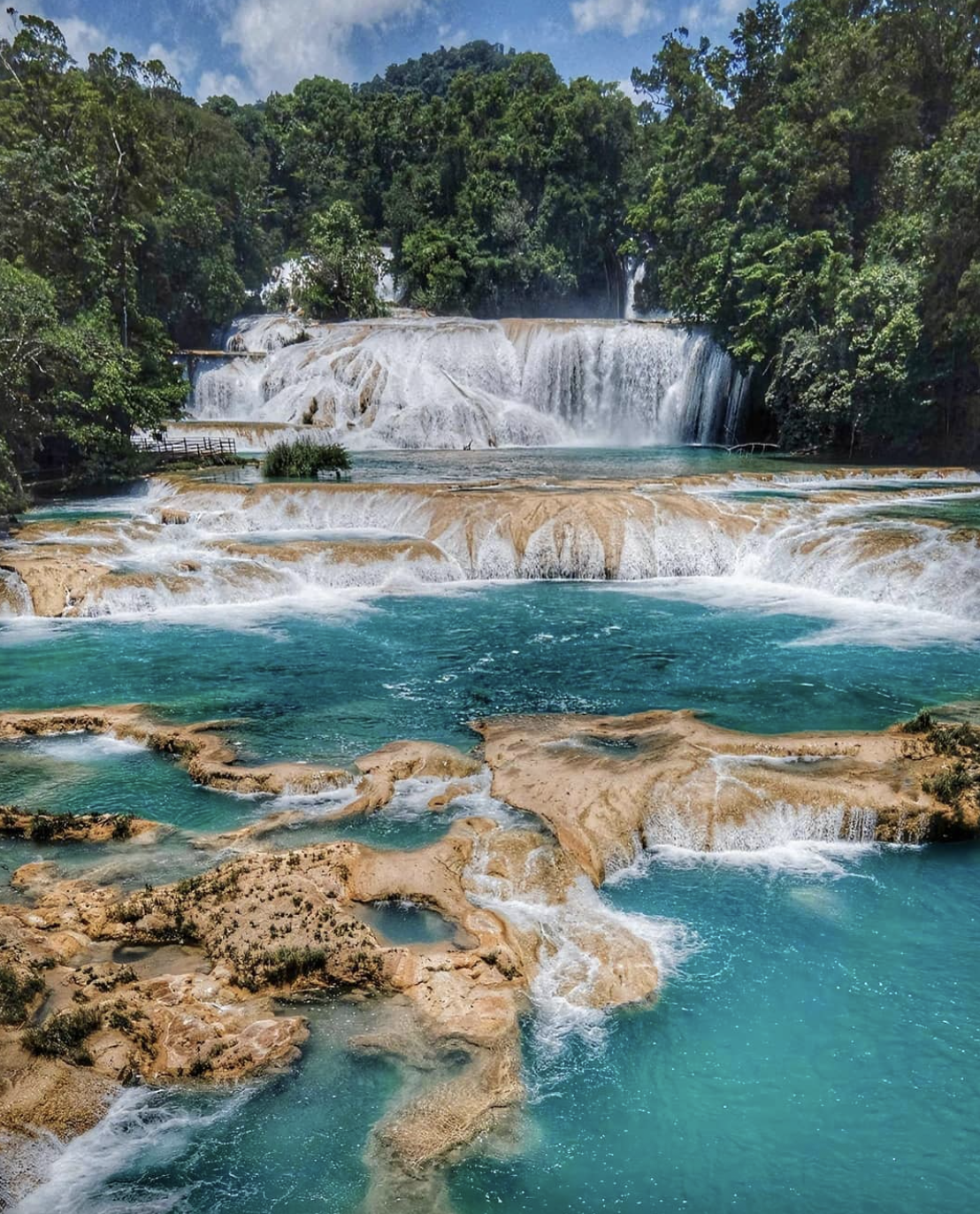
Agua Azul is one of the most recognisable waterfall landscapes in Chiapas. Rather than a single large drop, the site follows the course of the river through a long succession of limestone cascades and natural pools. The water can take on striking blue-green shades, especially when conditions are clear.
Why visit: For the scale of the landscape, the succession of cascades and the different viewpoints along the river.
Good to know: Water colour changes with the weather. After heavy rain, sediment can turn the water brown or cloudy. Swimming is only permitted in areas where access is explicitly allowed. Avoid restricted sections, strong currents and slippery rocks, particularly after rainfall, and follow local staff instructions.Agua Azul is around 63–65 km from Palenque, usually about 1–1.5 hours by car. Allow two to three hours at the site if you want to explore the different viewpoints rather than making it a quick photo stop.
For transport, entrance information and the wider northern route, see the Northern Chiapas Travel Guide.
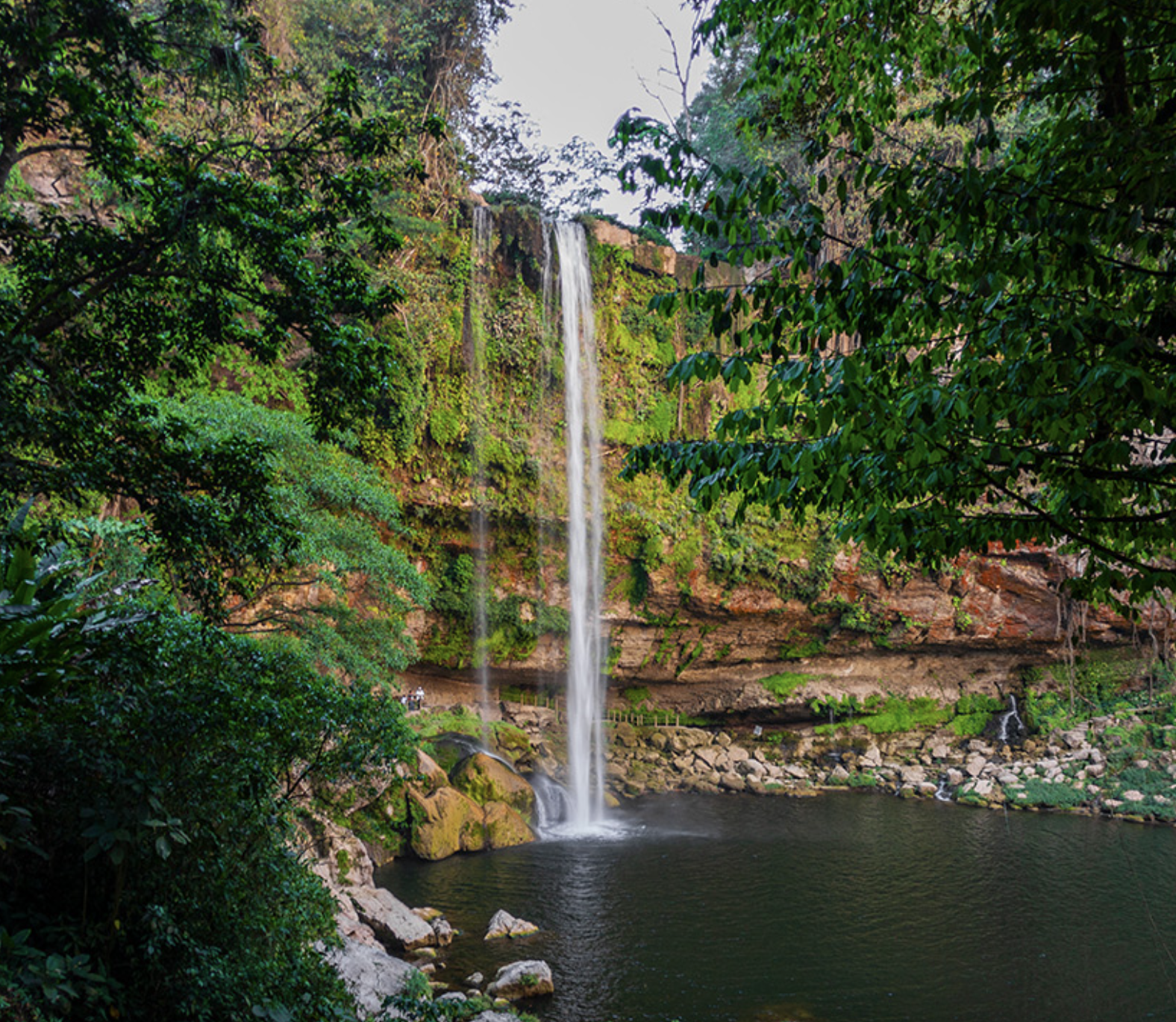
Misol-Há: A Single Waterfall in the Jungle
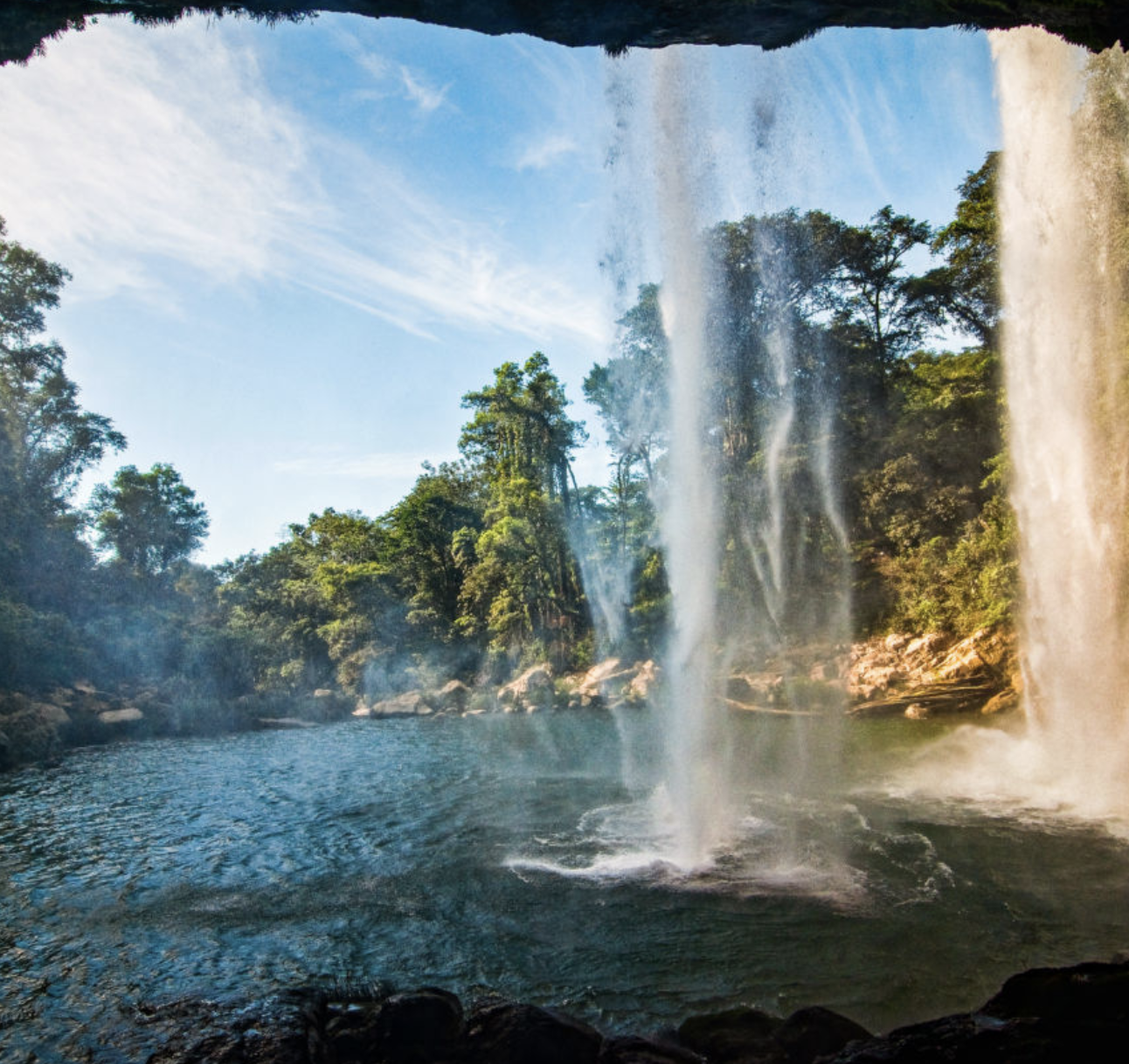
Misol-Há offers a different experience from Agua Azul. The waterfall drops around 35 metres into a large natural pool surrounded by tropical vegetation. A path runs behind the falling water, leading towards a small cave and giving you another perspective on the site.
Why visit: For the impressive single drop, the jungle setting and the opportunity to walk behind the waterfall.
Good to know: Misol-Há is around 20–22 km from Palenque, usually 25–30 minutes by car. Water flow changes with the season, and conditions around the pool can become less suitable for swimming after heavy rain. Check locally before getting into the water.Agua Azul and Misol-Há can be combined in one day from Palenque. Misol-Há is closer to town, while Agua Azul is farther along the same general route towards Ocosingo. Start early and allow enough time at both places. If travelling independently, check your return transport rather than assuming every service will wait for you.
Find access details and transport options in the Northern Chiapas Travel Guide.
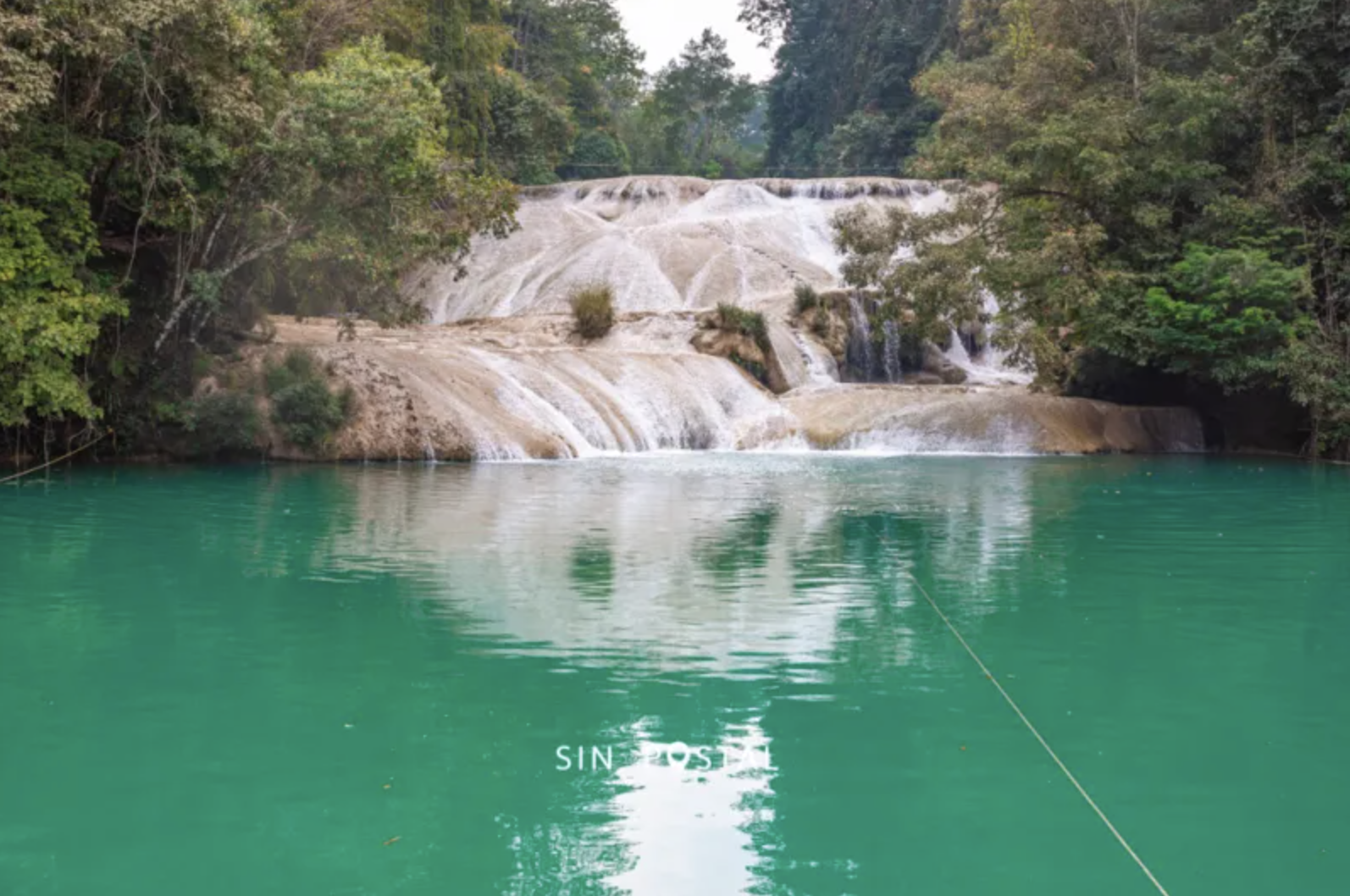
Roberto Barrios: Jungle Pools and Smaller Cascades
Roberto Barrios is a series of waterfalls and natural pools set in a green jungle landscape. The cascades are generally smaller and more spread out than those at Agua Azul, with several places to enjoy the river and its pools.
Why visit: For a more relaxed river experience, with natural pools and several cascades to explore rather than one main viewpoint.
Good to know: Roberto Barrios is around 31 km from Palenque, usually 40–45 minutes by car. Swimming is a main reason people visit, but water levels and access can change with rainfall. Don't assume every pool is open or safe on the day. Ask the community which areas are accessible and follow local instructions.If travelling by colectivo, confirm the last return departure to Palenque before setting out. Services can be irregular, so don't leave your return journey until the end of the afternoon.
For the route from Palenque and practical visitor information, see the Northern Chiapas Travel Guide.
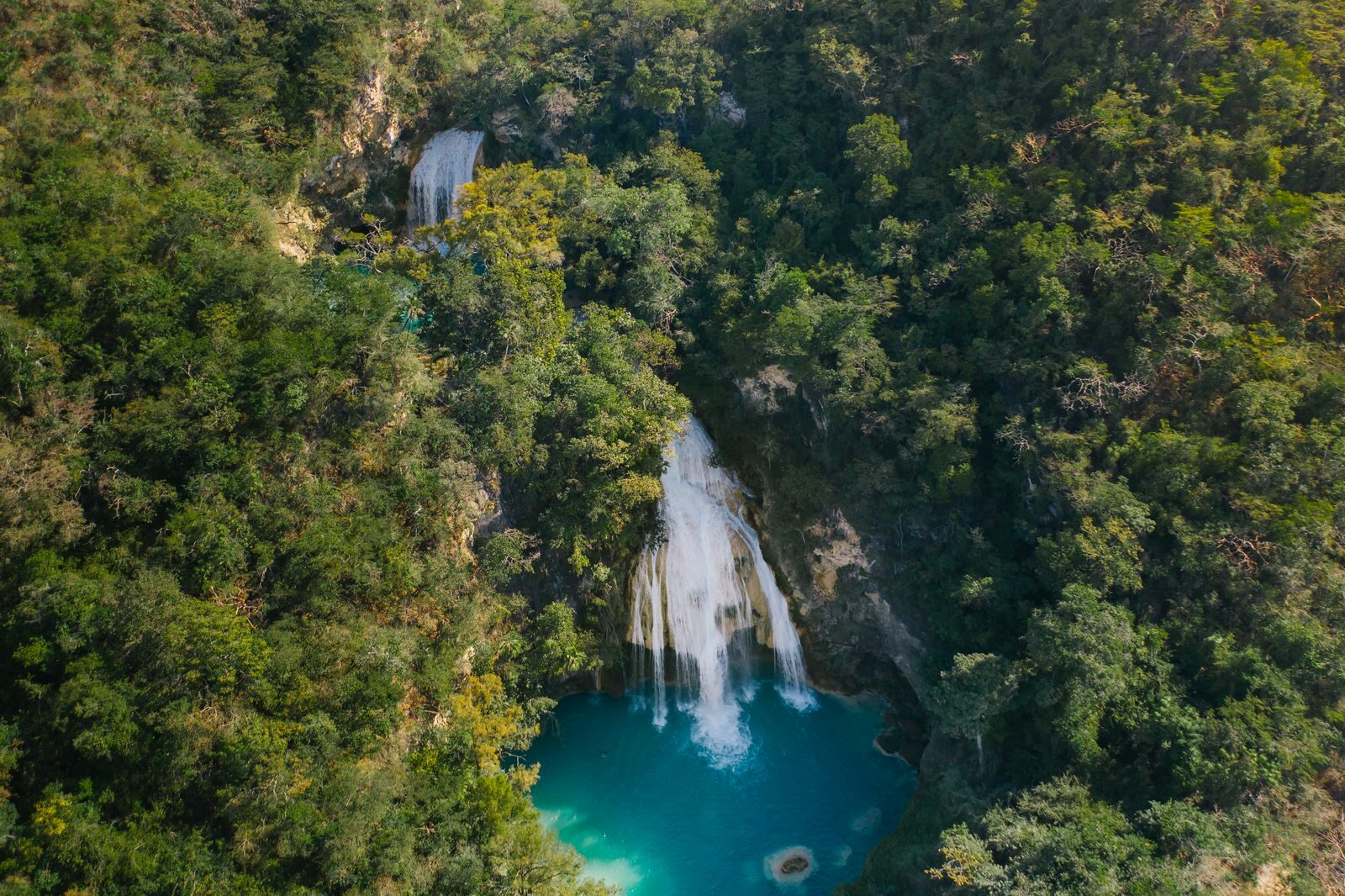
Waterfalls in Southern Chiapas
Southern Chiapas offers a different mix of landscapes. Around Comitán and Tzimol, El Chiflón has a developed waterfall trail, while Las 3 Tzimoleras is more focused on river activities and adventure. Farther east, Las Nubes takes you into a remote jungle and canyon environment in the municipality of Maravilla Tenejapa, on the eastern edge of the Lacandon region.
These places aren't all close to one another. Las 3 Tzimoleras is accessed through Tzimol, whereas El Chiflón has its own access route from the Comitán area. Las Nubes is a much longer journey and is better treated as a separate stop.
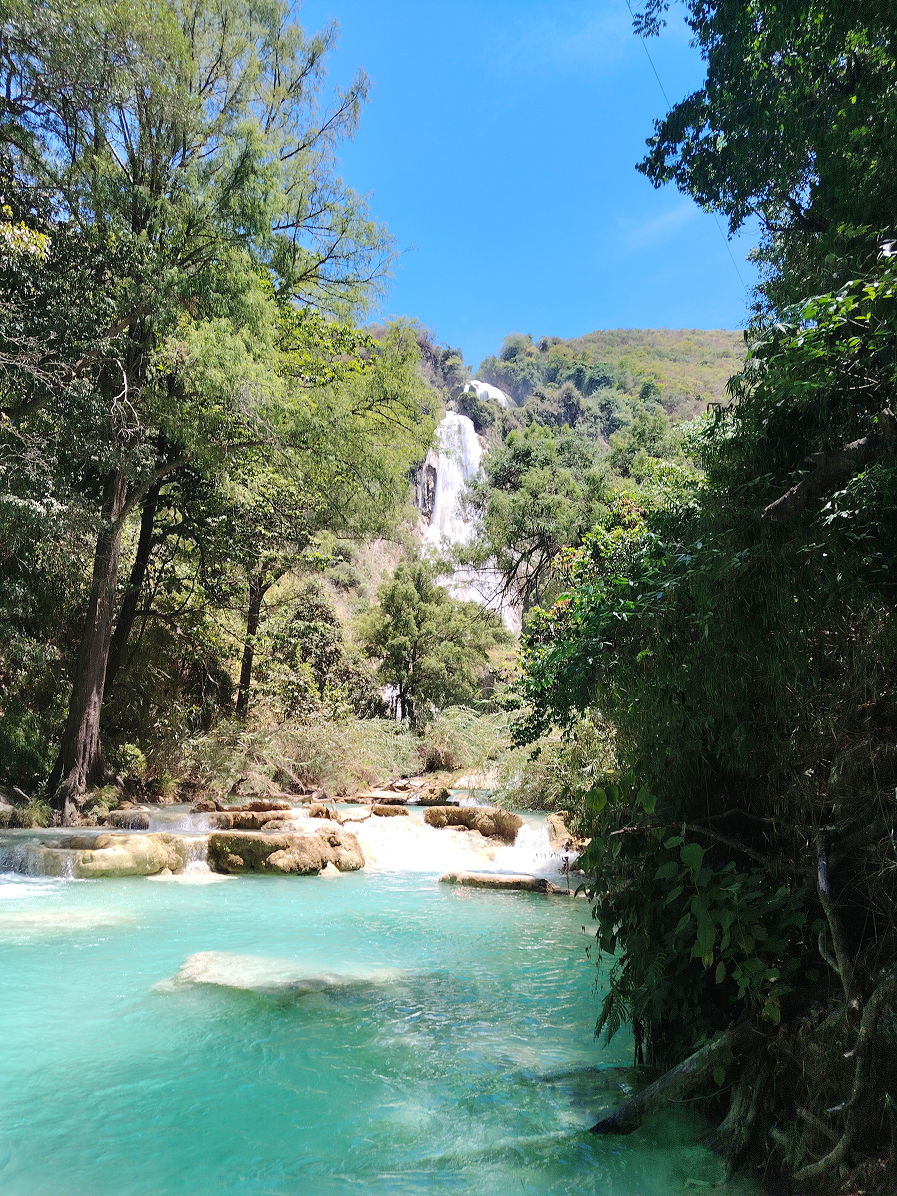
El Chiflón: A Trail of Waterfalls and Viewpoints
El Chiflón follows the San Vicente River through a series of waterfalls, with paths and viewpoints climbing alongside the cascades. The main attraction is Velo de Novia, a waterfall of around 120 metres, but the route also passes several other drops, including El Suspiro, Ala de Ángel and Quinceañera.
Why visit: For the combination of multiple waterfalls, accessible viewpoints and a developed visitor site. It's one of the easiest places in southern Chiapas to spend several hours following a waterfall trail.
Good to know: The walk involves an uphill trail and stairs, so allow time and bring suitable footwear. Late in the rainy season and into the early dry season, roughly October to December, the river can still have a strong flow. In drier months, water levels may be lower. Conditions vary from year to year. El Chiflón is around 34–41 km from Comitán, usually 45–60 minutes by car. Give yourself several hours for the trail, especially if you plan to continue to the upper viewpoints.
For the route from Comitán, local transport and entrance details, see the Southern Chiapas Travel Guide.
Las 3 Tzimoleras: Waterfalls for River Adventures
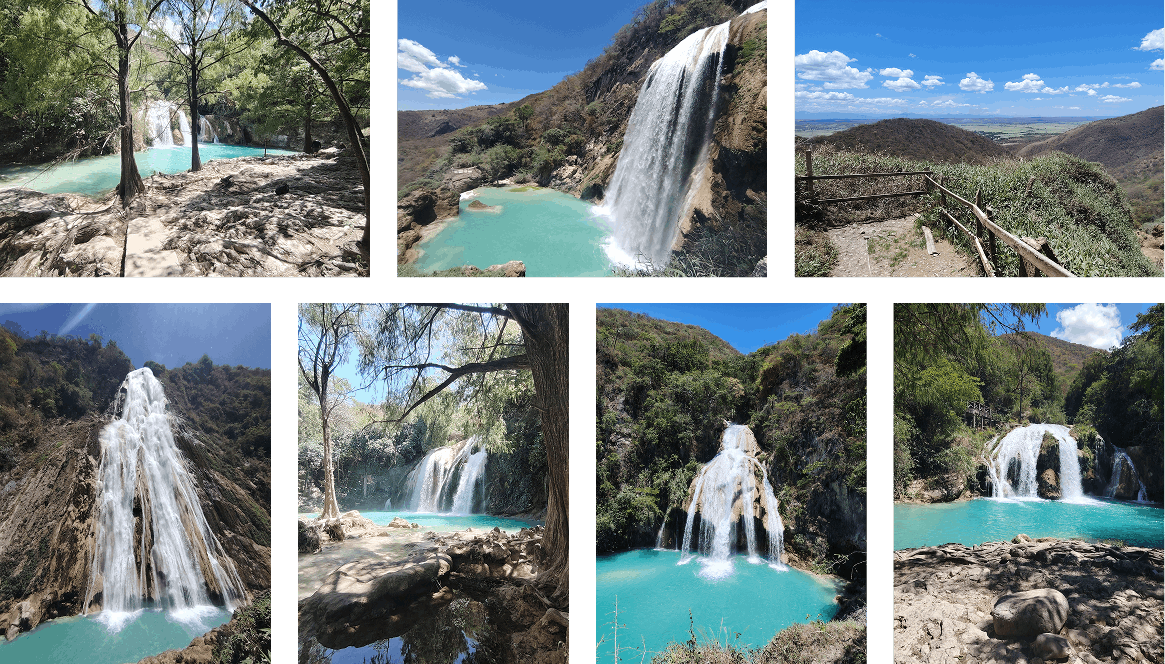
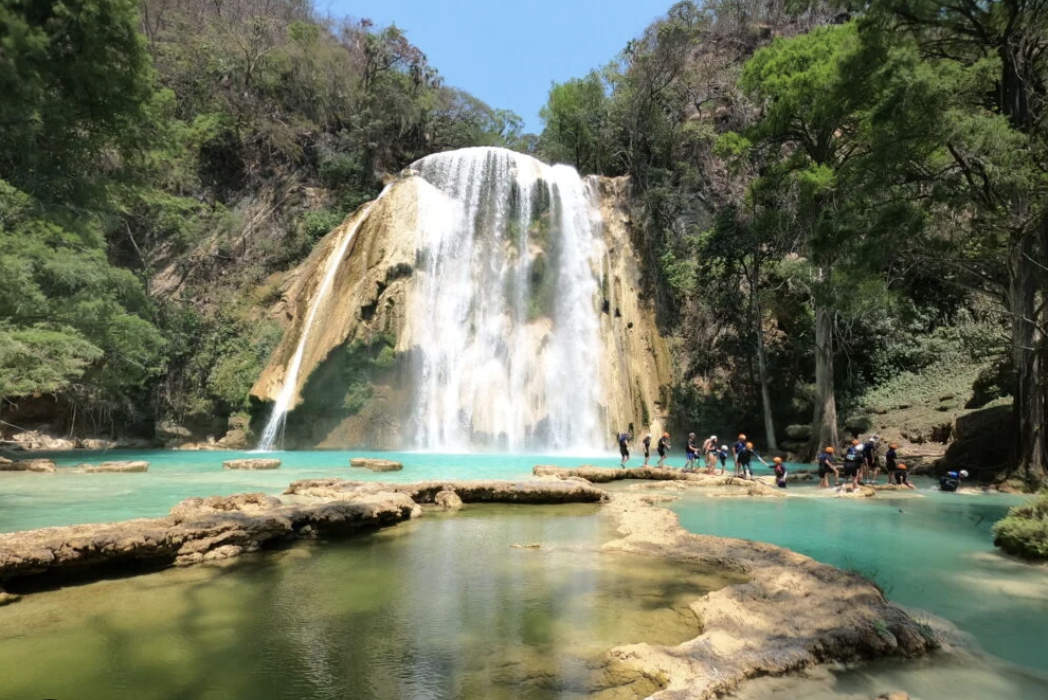
Las 3 Tzimoleras offers a more adventurous experience than the developed trail at El Chiflón. The site features three main waterfalls and natural pools, with activities that can include swimming, waterfall jumps, rappelling and canyoning.
Why visit: If you're looking for more than viewpoints and a walking trail, this is the place for a river-based adventure in a secluded setting.
Good to know: Although it is in the same wider area as El Chiflón, Las 3 Tzimoleras is accessed separately through Tzimol. From Comitán, allow around 15–20 minutes to reach Tzimol by taxi, followed by an approximately 50-minute 4x4 transfer arranged by the local operator. There is also a short walk to the river.Access and activities need to be arranged in advance. This isn't a straightforward walk-in visitor site, and river conditions determine which activities can operate safely.
See the Southern Chiapas Travel Guide for regional route and planning information.
Las Nubes: Remote Waterfalls and Jungle Canyons
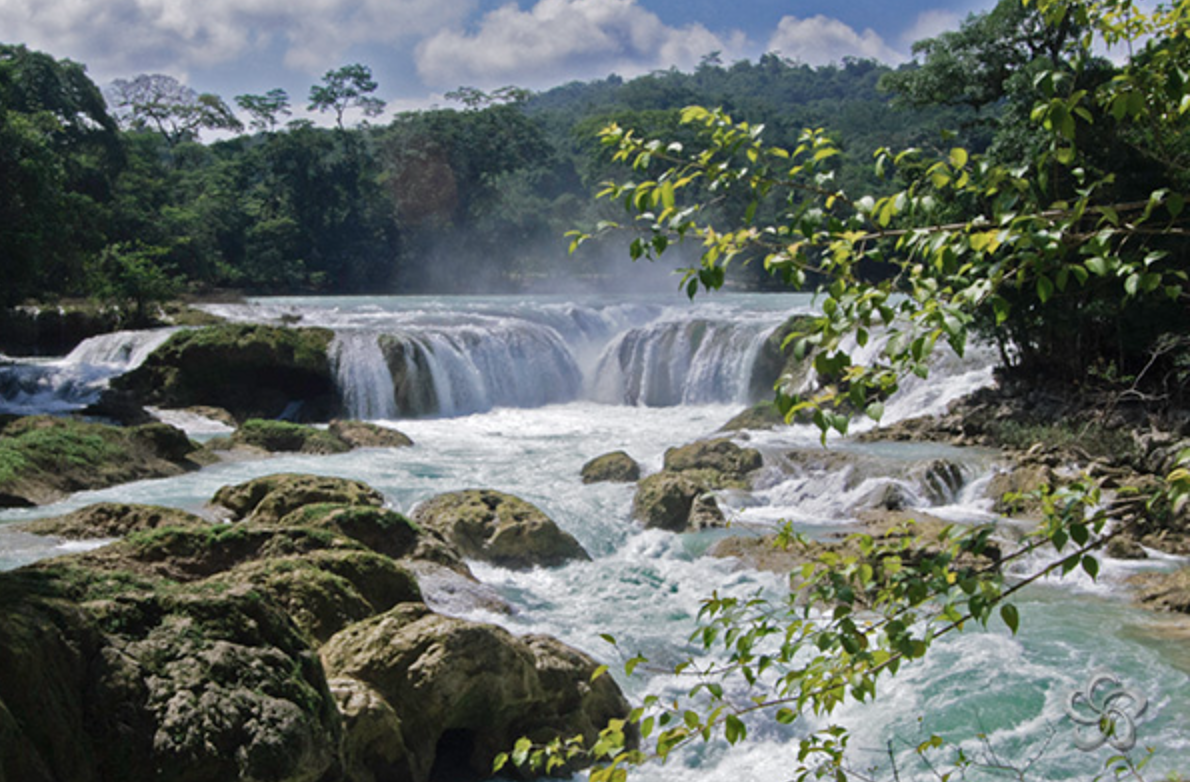
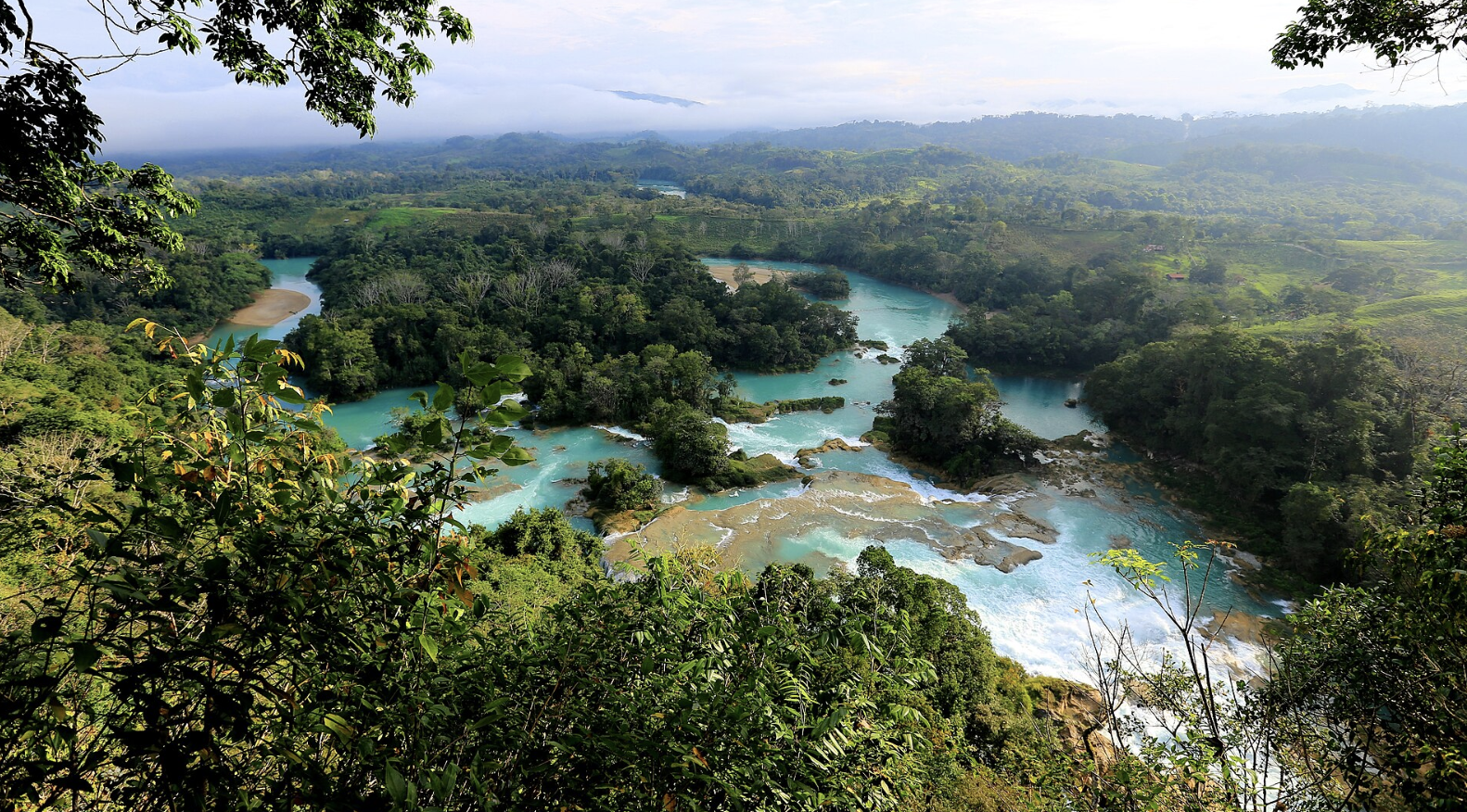
Las Nubes is centred on the Santo Domingo River in the municipality of Maravilla Tenejapa, on the eastern edge of the Lacandon region. Here, the river cuts through limestone canyons surrounded by dense tropical vegetation, creating a landscape of rushing water, cascades, natural pools and steep canyon walls.
Suspension bridges and trails offer different views of the river and its waterfalls. The ecotourism centre also has cabins, a restaurant, bathrooms and camping facilities.
Why visit: For a remote jungle landscape and a more immersive nature experience. Las Nubes is as much about the river, canyon and surrounding forest as it is about the waterfalls themselves.
Good to know: Las Nubes is around 126–130 km from Comitán by road. Allow roughly 3–3.5 hours each way, depending on road conditions and stops. The access route follows the Southern Border Highway before the turn-off towards the Ejido Las Nubes. Public transport options are limited, and guided activities such as rafting or longer hikes may need to be arranged separately.Staying overnight makes more sense than trying to visit in a rushed day trip. The centre has cabins and camping facilities.
For access, accommodation and transport information, see the Southern Chiapas Travel Guide.
When to Visit the Waterfalls in Chiapas
Water levels, water colour and swimming conditions depend heavily on rainfall. There isn't one perfect season for every waterfall.
During drier periods, water at places such as Agua Azul is more likely to appear clear and blue-green. Trails and access roads can also be easier to manage. The trade-off is that some waterfalls may have less water.
After heavy rain, rivers can become much stronger and waterfalls more impressive, but sediment may change the colour of the water. Currents can also become dangerous, and swimming areas may be closed.
Before swimming, check local conditions and restrictions at the site. Never assume that a pool is safe just because other visitors are in the water.
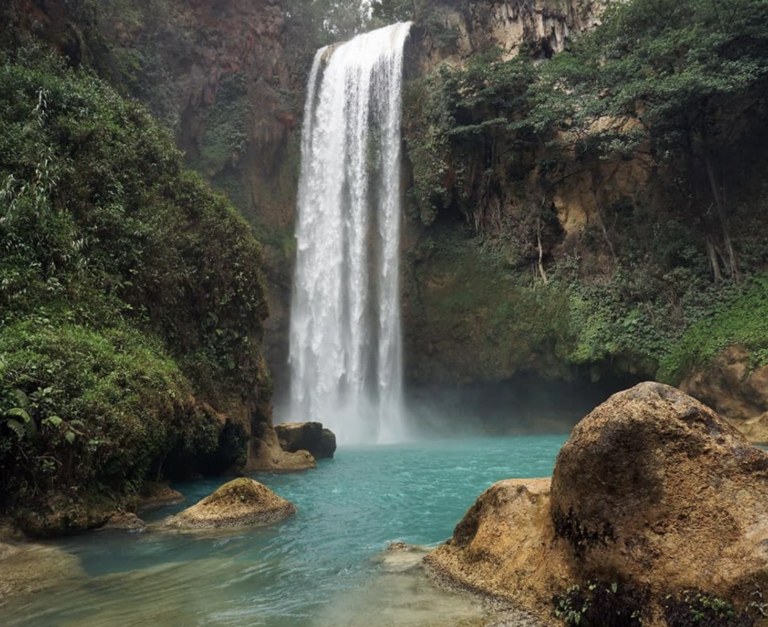
Planning a Waterfall Trip in Chiapas
The best way to explore the waterfalls is to group them by region rather than trying to visit everything from one base.
From Palenque: Agua Azul and Misol-Há can be combined in one day along the same general route. Roberto Barrios is a separate excursion. Give each trip enough time, particularly if you're relying on colectivos or local transport.
From San Cristobal/Comitán and Tzimol: El Chiflón and Las 3 Tzimoleras fit into a southern Chiapas route based around the Comitán area. They offer different experiences, so choose according to whether you prefer a developed waterfall trail or a more activity-focused river excursion.
Farther east: Las Nubes is a longer journey to Maravilla Tenejapa, on the eastern edge of the Lacandon region. Plan it as a separate part of your route, ideally with an overnight stay.
For detailed transport options, costs, accommodation and routes, use the regional guides: